What is tVNS?
The short version
tVNS stands for transcutaneous vagus nerve stimulation. It is a small device that sends gentle electrical pulses to a branch of the vagus nerve through the skin of the ear. No surgery. No implant. Used at home, for a few hours a day, alongside whatever treatment you are already on.
The vagus nerve is one of the most important nerves in the body. It connects the brain to the heart, lungs, gut, and immune system, and it carries messages in both directions. Clinicians have known for over a century that stimulating this nerve can change how the brain behaves, reducing seizures, lifting mood, calming inflammation, and shifting the nervous system toward a steadier state. Until recently, the only way to do it was through surgery. tVNS does it from the outside.
A nerve with a long history
The vagus nerve gets its name from the Latin word for "wanderer," and it earns it. It is the longest cranial nerve in the body, running from the brainstem down through the neck and branching out to almost every major organ: the heart, the lungs, the stomach, the intestines, the spleen. It touches more of you than almost any other single nerve.
The idea of stimulating it therapeutically is not new. Clinicians first experimented with electrical stimulation of the vagus nerve in the 1880s. By the late 1990s, surgically implanted vagus nerve stimulators were being used routinely for drug-resistant epilepsy. They worked. But they required an operation under general anaesthetic to place a stimulator under the skin of the chest and wrap a wire around the nerve in the neck. Not everyone was suitable, willing, or able to access that surgery.
The breakthrough behind tVNS is the discovery that a small branch of the vagus nerve surfaces in the outer ear, on a ridge called the cymba conchae. This branch, sometimes called Arnold's nerve, connects directly to the same brainstem centres that the implanted stimulators reach. By placing a small electrode on this spot and delivering controlled electrical pulses through the skin, you can stimulate the vagus nerve without going anywhere near the neck, the chest, or an operating theatre.
What the vagus nerve actually does
To understand why stimulating this nerve matters, it helps to know what it does when it is working on its own.
The vagus nerve is part of the autonomic nervous system: the part of the nervous system that runs in the background, regulating things you do not consciously control. Heart rate. Breathing. Digestion. Inflammation. Arousal. Mood.
It works as a two-way communication channel. About 80% of the fibres in the vagus nerve are afferent, meaning they carry information from the body to the brain. They tell the brain what is happening in the organs, the gut, the immune system. The remaining 20% carry instructions back the other way, from the brain to the body.
This two-way traffic passes through a relay station in the brainstem called the nucleus tractus solitarii, or NTS. From there, signals fan out to several brain centres that matter for health.
- The locus coeruleus, which releases norepinephrine and regulates attention, arousal, and the stress response.
- The raphe nuclei, which produce serotonin and play a central role in mood and pain regulation.
- The thalamus, which directs signals to the cortex and helps the brain shift between internal states and external tasks.
- The hypothalamus, which governs appetite, sleep, and hormonal balance.
There is also a pathway called the cholinergic anti-inflammatory pathway. When the vagus nerve is activated, it can trigger a chain of signals that end in the spleen, where a chemical called acetylcholine is released. This binds to receptors on immune cells and tells them to reduce the production of inflammatory molecules. In other words, vagal stimulation can dial down inflammation directly, through a biological circuit that has nothing to do with drugs.
How tVNS works, step by step
- The device clips into your ear. A small electrode sits against the cymba conchae, a part of the outer ear that anatomical studies describe as supplied by the auricular branch of the vagus nerve. Brain imaging in living people supports this.
- You switch it on. The device sends tiny, rhythmic electrical pulses into the nerve through the skin. Most people describe a gentle tingling. It should never be painful.
- The pulses travel up the vagus nerve. From the ear, the signal reaches the brainstem within milliseconds. From there, it spreads to the brain centres listed above.
- Over time, things change. The effects are not instant. The brain adapts gradually. Seizures may become less frequent. Mood may lift. Inflammatory markers may fall. The benefits that matter most tend to emerge over weeks to months of consistent daily use.
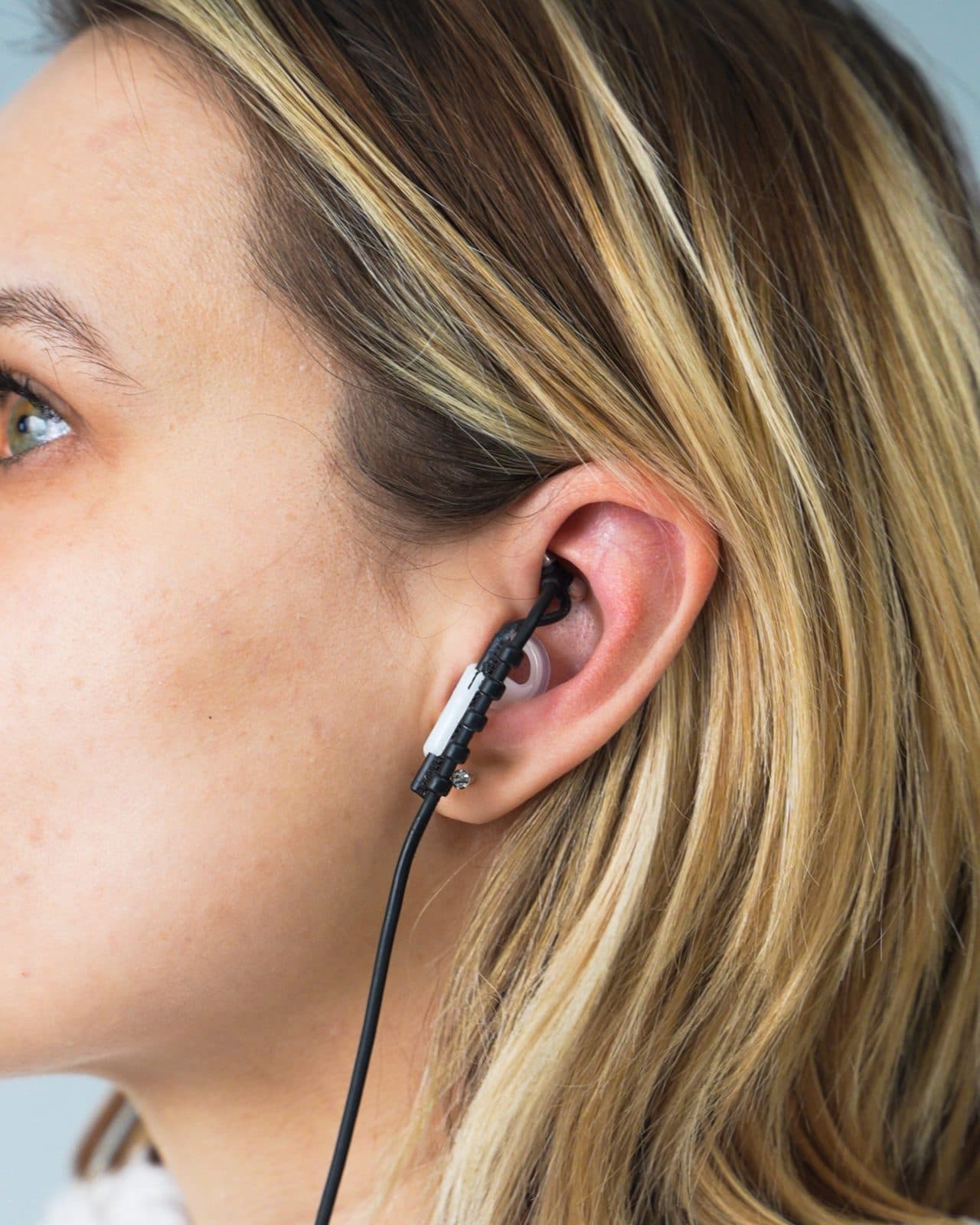
A typical session runs for a few hours. You can use the device while reading, working, watching television, or resting. You do not need to stop what you are doing or go to a clinic. You use it at home, every day, as part of your normal routine.
Why the cymba conchae matters
Not all vagus nerve stimulation through the ear is the same. Where you place the electrode makes a significant difference.
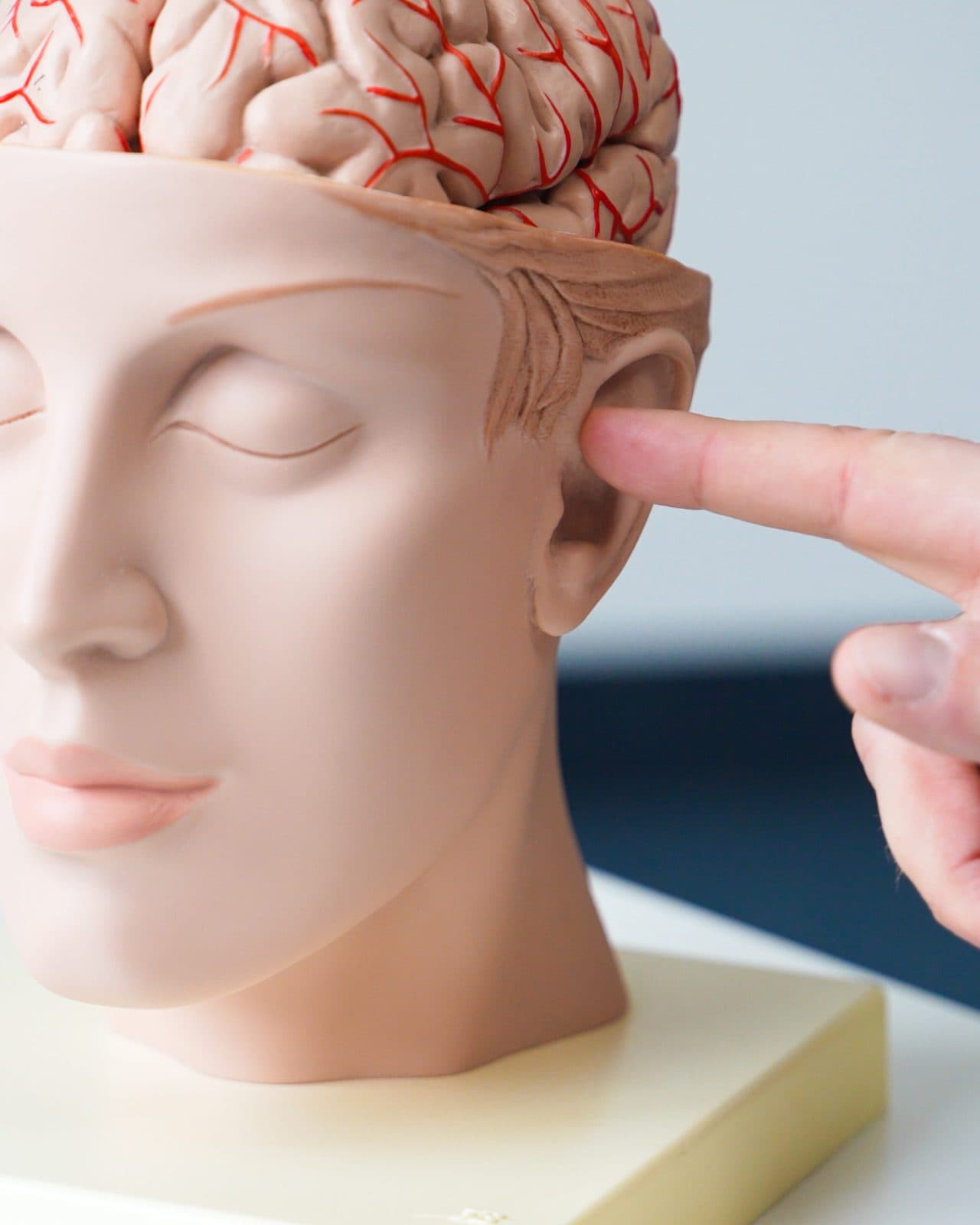
Anatomical studies describe the cymba conchae as supplied by the auricular branch of the vagus nerve, and imaging researchers describe it as supplied by that branch alone. Other parts of the ear, such as the tragus, have mixed innervation, meaning the electrical signal is shared with other nerves that have nothing to do with the vagal pathway. The earlobe has almost no vagal innervation at all, which is why it is often used as a sham site in research studies.
Brain imaging studies in living people have confirmed that stimulating the cymba conchae activates the brainstem relay centres (including the NTS, the locus coeruleus, and the raphe nuclei) in a way that stimulating the earlobe does not. This anatomical precision is why the tVNS device places the electrode exactly where it does.
What tVNS is used for
The tVNS device distributed by Anatomical Concepts UK is a CE marked Class IIa medical device. Its approved indications include:
- Epilepsy: for people whose seizures have not responded fully to medication.
- Depression: as an adjunctive treatment, particularly for people who have not responded to conventional antidepressants.
- Chronic migraine: for people with headaches on 15 or more days a month, including migraine with aura.
- Prader-Willi syndrome: specifically for the temper outbursts that are among the most distressing features of the condition.
Each of these conditions has its own page on this site, with the evidence, the expected time course, and the practical detail of what daily use looks like. The clinician zone has the deeper clinical literature.
See all conditions For clinicians
What tVNS is not
It is worth being clear about what tVNS is not, because the internet is full of claims about vagus nerve stimulation that go well beyond the evidence.
- It is not a cure for anything. It is an adjunctive treatment, used alongside the medication, therapy, or lifestyle interventions your clinician has already put in place.
- It is not a quick fix. The benefits build slowly, over weeks to months. If you use the device for three days and feel nothing, that is normal. It asks for patience.
- It is not a wellness gadget. The tVNS device is a regulated medical device, manufactured to medical device standards, with specific approved indications. It is not the same as the unregulated "vagus nerve toning" products you may have seen advertised online.
- It is effective for many people, but not for everyone. The device delivers vagal stimulation reliably, and the brainstem pathways it engages are well established. What varies is whether that stimulation produces a meaningful improvement for a given person with a given condition. In the strongest studies, under half of participants achieve a clear response. We would rather you knew that before you bought than discovered it afterwards.
The difference between tVNS and other vagus nerve stimulation
If you search for vagus nerve stimulation, you will find several different products and approaches. Here is how they relate to each other.
Implanted VNS (iVNS). A surgically implanted stimulator placed under the skin of the chest, with a wire wrapped around the vagus nerve in the neck. It has the longest track record and the stronger evidence, particularly for epilepsy. No trial has compared it directly with tVNS, so we cannot say how their results compare. But it requires surgery, under general anaesthetic, and carries surgical risks. tVNS is the non-invasive alternative to the same idea.
Cervical tVNS (tcVNS). A handheld device pressed against the neck to stimulate the cervical branch of the vagus nerve through the skin. The gammaCore device is the best known example. It has regulatory clearance for migraine and cluster headache in several regions. It targets a different branch of the nerve and uses different stimulation parameters from auricular tVNS.
Auricular tVNS (taVNS). This is what the tVNS device does. It stimulates the auricular branch of the vagus nerve through the ear, specifically at the cymba conchae. It is the approach with the broadest range of approved indications and the one distributed by Anatomical Concepts UK.
"Vagus nerve toning" products. Unregulated consumer products marketed for relaxation, stress relief, or general wellness. These are not medical devices, do not have regulatory approval for any medical indication, and cannot legally make medical claims. We do not sell them and we do not recommend them.
What to do next
If you have read this far and want to know more, here are the most useful next steps.
- Read the condition page that applies to you. Each one explains the evidence, the expected time course, and what daily use looks like for that specific condition.
- Talk to your clinician. If they want more information, we can speak to them directly.
- Contact us. If you want to talk through whether tVNS might be relevant before you go further, call or email. We would rather you were well informed before you buy than surprised afterwards.
Contact Anatomical Concepts UK
This page is for information only. It is not medical advice. Any decision about tVNS should be made with your clinician, who knows your full medical history.
tVNS is a Class IIa medical device manufactured by tVNS Technologies GmbH, Germany. Distributed in the UK by Anatomical Concepts UK Ltd.