How to access tVNS in the UK
The way to get tVNS in the UK is to talk to us first. We do not sell this device to someone we have not spoken to. What follows the conversation is a supported programme: a fitting call, scheduled contact through the first months, a diary that belongs to you, a letter for your consultant, and a decision at the review point for your condition. This page explains why it is built that way, what it looks like week by week, and what it costs.
Why a programme, not a device
tVNS is not a quick treatment. The benefit builds over weeks to months of daily use, and the first weeks are a titration period, a stage with its own job, not a wait to see. A device sold in a box with a fortnight to change your mind asks you to judge a treatment before it has had a chance to work, and then leaves you alone for the months that matter.
So we do it differently. The decision to continue is made at your condition's review point, with your diary in front of you and your consultant's view alongside. Until then, we are in contact on a schedule, and there is a named person who answers the phone.
We are finalising a supported evaluation period around that decision point, so that the money follows the same shape as the treatment. The terms will be set out on this page once they are settled with the manufacturer. Until then, ask us on the call; you will get a straight answer.
How long until you can tell
The honest numbers, by condition. They come from the trials and from the manufacturer's guidance, and they set the review schedule.
| Condition | First signs of benefit | Clearest picture | Calls with us | Decision point |
|---|---|---|---|---|
| Drug-resistant epilepsy | Often 12 to 20 weeks | 20 weeks or later | Weeks 2, 4, 8, 12 and 20 | Week 20 |
| Prader-Willi syndrome | About 9 months | 9 to 12 months | Months 1, 3, 6, 9 and 12 | Month 12, with a checkpoint at 9 |
| Depression | Around 4 weeks | 8 to 12 weeks | Weeks 2, 4, 8 and 12 | Week 12 |
| Chronic migraine | 8 to 12 weeks | 12 weeks | Weeks 2, 4, 8 and 12 | Week 12 |
Not everyone responds. In the strongest trials, under half of participants do. The schedule exists so that you find out properly, at the right time, rather than giving up at week three or persisting past the point where the answer was already clear.
The programme, step by step
The same shape for every condition, with the timings from the table above.
- First contact. You fill in the short form or phone us. We reply within the minute with what happens next, and nobody asks for money.
- The suitability call. Within three working days, 20 to 30 minutes. We check the four things the device must not be used with, ask who your consultant is, ask what you are hoping for, and say plainly what a realistic expectation looks like. If we think tVNS is unlikely to help, we say so on this call. Three outcomes are possible: go ahead, talk to your consultant first (we offer to speak to them), or not suitable, and why.
- A baseline. Before the device arrives, you keep a diary: eight weeks of seizures for epilepsy, four weeks of outbursts for Prader-Willi syndrome, a few weeks of headache days or mood for the other conditions. We post you a printed diary after the suitability call, and the letter for your consultant travels with it. If you already keep a diary, you carry on. Your medication should be stable through this time, so that any change can be read clearly.
- Your consultant informed. We write to your consultant or specialist team when you start: what the device is, the protocol, the review schedule, our contact details, and a request for their view on suitability. The device is used under medical supervision, and this is how that stays real.
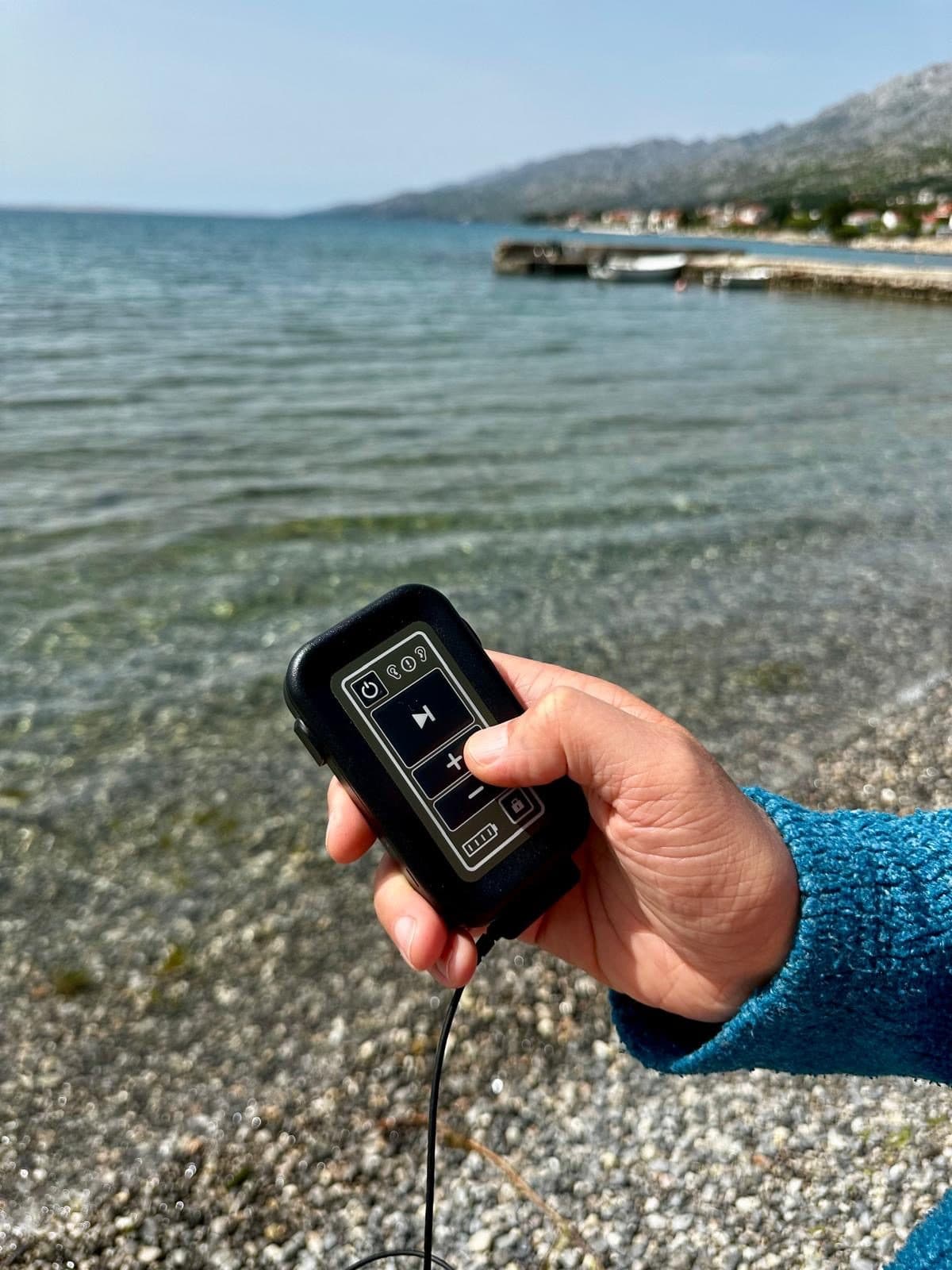
- The device arrives. The manufacturer's box, with a welcome letter, a one-page first-evening sheet, a routine card for the fitting call, 28-day tick cards, spare silicone rings and, for Prader-Willi syndrome, a change-signal card. Your diary is already with you. Day one is a short session: electrode in, tick, out.
- The fitting call. By video, 30 to 45 minutes. We get the electrode sitting in the right place, bring the intensity up to a clear but comfortable tingling, and agree where the sessions will live in your day, with a fallback slot for the days that go wrong. Four hours a day sounds like a prescription; in practice it is the evening film plus the drive to work.
- The first month. Short sessions building to the target by the end of week two. A call at week 2 to reset the intensity as your skin gets used to it. A call at week 4, which we call the wobble week, because that is when routines slip and we would rather fix the routine than blame the person.
- Steady state. Calls at the review points in the table, to look at the diary together without judging it yet. Before each of your own appointments, a one-page summary to take to your consultant: adherence, diary totals, side effects, questions to ask.
- The decision. At the review point, you, your consultant and we look at the diary and name the outcome plainly: a clear response, a partial response worth continuing, or no response. If it has not helped, we say so and help you stop.
- After. If you continue, consumables on a schedule and an annual check-in. Questions about medication or tapering belong to your clinician, and we route them there.
What each stage usually feels like, in the order it happens: Twenty weeks, week by week for epilepsy, and Twelve months, month by month for Prader-Willi syndrome.
Two things worth knowing about the calls
They are not clinical advice. The person taking the calls adjusts fit, intensity within the manufacturer's range, and routine. Anything about medication, a change in seizure pattern or mood, or a new symptom goes to your consultant, with your agreement, the same day.
They do not store your symptoms. The diary is printed and belongs to you; you take it to your own clinician. The manufacturer's Patient App logs your sessions on your phone, and you can show that log to your consultant. We hold your contact details and brief notes of what was agreed, and nothing else. Our privacy policy has the detail.
What it costs
The device is £3,046.76 including VAT (£2,538.97 ex VAT). That includes the stimulator, the ear electrode, the storage case, the charger, the electrode cream, and the starter pads: everything you need to begin. Current consumable prices are on the device page.
The price is not the whole story, and it is not a shop price. It comes with the calls, the letters, the summary sheets and the decision at the review point described above. We are finalising a supported evaluation period so that the money follows the same shape as the treatment, and we are arranging a consumables plan so that pads and electrodes arrive without you having to think about it. Both will be set out here when they are settled.
Two things are true now: nobody asks for money on the first call, and if we agree to go ahead, the costs and the next steps are set out in writing before anything is paid.
A note on NHS access
tVNS is not currently available through the NHS as a routine treatment. There is no NICE guidance or commissioning policy that covers it at the time of writing. Individual clinicians may recommend it within their clinical discretion, but funding typically comes from the patient or their family.
If your clinician believes tVNS should be funded in your case, they can make an individual funding request. We can provide the supporting evidence and a letter template. We mention this because it is a question we are often asked, and the honest answer is better than no answer.
Common questions about access
Do I need a prescription? No. But the Instructions for Use state that the device should be used under medical supervision, which is why the programme writes to your consultant and why we ask on the first call who they are.
What if my neurologist has never heard of it? That is common, and it is not a reason to stop. We write to them with the evidence and the protocol, we offer to speak to them directly, and the clinician zone has the material in their language. Most consultants are glad to be informed rather than surprised.
Can my clinician order on my behalf? Yes. We arrange invoicing for clinical settings, and the programme runs the same way with the clinician as the point of contact. There is a page for clinicians on demos and case discussions.
Is there a trial period? Judging whether the device is working takes weeks to months of consistent use, so a short trial would tell you nothing. We are finalising a supported evaluation period with a decision point matched to your condition, and the terms will be set out on this page once they are settled. Until then, ask us when you call. The statutory 14 day cancellation right applies to any purchase in the meantime.
Can I use tVNS alongside other treatments? Yes. tVNS is designed to be used as an adjunct to your existing treatment. It is not a replacement for medication, therapy, or any other intervention your clinician has put in place. Your medication should stay stable through the evaluation so that any change can be read clearly.
Is the research device a way to get different settings? No. The research device is supplied for ethics-approved studies, not to patients, and the certified therapy device delivers the certified protocol. If a clinician wants to study a question, that is a different conversation.
Where to go from here
- Request a call to start. Two minutes on the form; we phone you within three working days.
- Conditions for the evidence and the time course for your condition.
- Twenty weeks and Twelve months for what each stage of the programme feels like.
- The device for what is in the box, the app, and the consumables.
- For clinicians if you are a healthcare professional.
This page is for information only. It is not medical advice. Any decision about tVNS should be made with your clinician, who knows your full medical history.
tVNS is a Class IIa medical device manufactured by tVNS Technologies GmbH, Germany. Distributed in the UK by Anatomical Concepts UK Ltd.