Vagus nerve stimulation has been helping people for more than a century. tVNS brings it home.
For people living with drug-resistant epilepsy, depression, chronic migraine or Prader-Willi syndrome, tVNS offers the principle of an implanted stimulator without the surgery. A small device worn in the ear is used daily at home, with our team supporting you throughout the months it may take to understand whether it is helping.
Healthcare professional? The clinician zone has the evidence, parameters and practice guide.
What is tVNS
A 60-second explainer
The vagus nerve runs from the brainstem to nearly every organ in the body. It carries messages in both directions, regulating heart rate, digestion, inflammation, arousal, and mood. Clinicians have known for a long time that stimulating this nerve can calm the brain, reduce seizures, and lift mood. For thirty years the way to do it was an implanted stimulator: an operation under general anaesthetic, a wire around the nerve in the neck, and a generator under the skin of the chest.
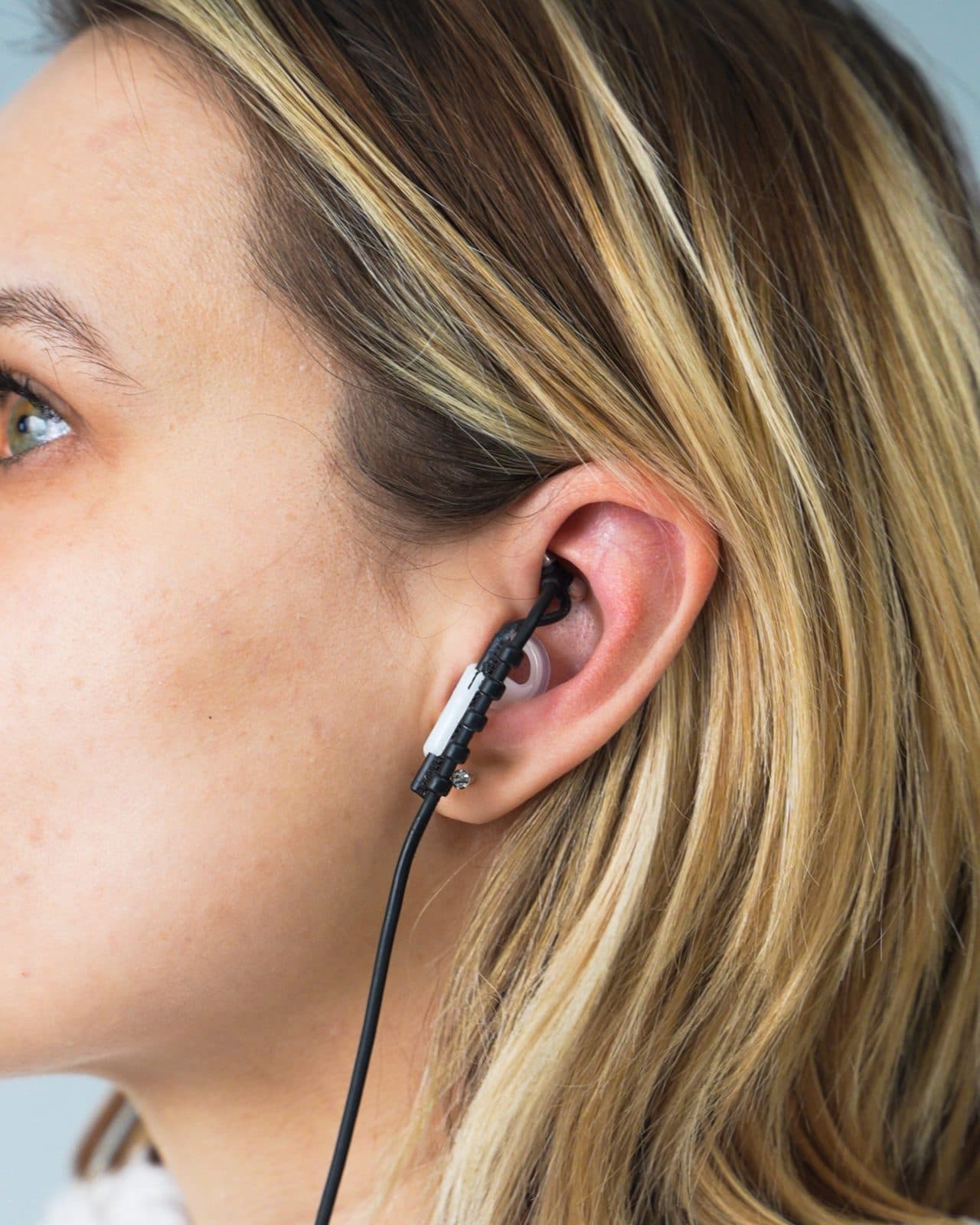
tVNS reaches the same nerve from outside. A branch of the vagus surfaces in the cymba conchae of the outer ear, and a small electrode there delivers gentle electrical impulses to it. No surgery. No implant. Used at home, for a few hours a day, alongside whatever treatment you are already on.
It is not quick. The benefit builds over weeks to months of daily use, and the first weeks are a titration period, a stage with its own job, not a wait to see. That is why we sell it as a supported programme rather than a device in a box.
The tVNS device is manufactured in Germany by tVNS Technologies GmbH and is a certified Class IIa medical device under EU MDR 2017/745. Anatomical Concepts UK is the UK distributor and the UK Responsible Person.
The four certified indications
Where tVNS has a role to play
The device is certified for four conditions, and we keep our claims inside them. Each page gives the evidence, what to expect, and how long it takes to know.
Epilepsy
For adults whose seizures have not responded to medication, including those offered an implanted stimulator who did not want the operation. Used alongside anti-seizure drugs, never instead of them.
First signs often at 12 to 20 weeks. Decision at 20.
Read more →Prader-Willi syndrome
For adults with PWS whose temper outbursts dominate daily life, and the families and carers who run the routine. One of very few devices with a certified indication for PWS.
Benefit takes about nine months. Decision at 12.
Read more →Depression
A long-standing indication for vagus nerve stimulation, now available without surgery. Used alongside existing treatment.
First signs around 4 weeks, clearest at 8 to 12.
Read more →Chronic migraine
For people with headaches on 15 or more days a month who have not been helped enough by preventive medication.
Allow 8 to 12 weeks before judging.
Read more →How it works in the UK
Supervised, from the first call to the decision
A treatment that reveals itself at week eight to twenty cannot be sold like a gadget with a fortnight to change your mind. This is what we suggest instead.
- 01
A conversation first
We do not sell this device to someone we have not spoken to. Ask for a call and we phone you within three working days for 20 to 30 minutes. If we think tVNS is unlikely to help, we say so. Nobody asks for money on that call.
- 02
Your consultant in the loop
The device is used under medical supervision. We write to your consultant when you start, and give you summary sheets to take to appointments, so the person who knows your history is part of the decision.
- 03
A supported start
A fitting call gets the electrode in the right place and the intensity comfortable. Then scheduled calls through the first months, a diary that belongs to you, and a named person who answers the phone.
- 04
A decision at the review point
Benefit builds over weeks to months, so the decision to continue is made at your condition's review point, not after a fortnight. We are finalising a supported evaluation period around that decision, and the terms will be published here when they are settled.
Why the UK home for tVNS
It is not just the device. It is the people behind it.
When you take on a treatment that asks for months of daily use, what matters is who is with you for those months. Who answers the phone. Who talks to your consultant. Who handles a warranty claim. For tVNS in the UK, that is us.
UK distributor and UK Responsible Person

Non-surgical VNS
The same principle as the implanted vagus nerve stimulator that neurologists have used for decades, delivered through the ear instead of an operation. It can be stopped at any time.
A programme, not a box
Fitting, scheduled contact, a diary, a letter for your consultant, and consumables kept supplied. The device is the smallest part of what you get.
Evidence-led guidance
We tell you honestly what the research supports and what it does not, including the fact that in the strongest trials under half of participants respond.
The UK Responsible Person
Anatomical Concepts UK is registered with the MHRA as the UK Responsible Person for this device. Warranty, support, and safety reporting are handled here, by a company doing rehabilitation technology since 1992.
Evidence at a glance
The numbers in plain sight
A short snapshot of what the strongest studies of auricular tVNS show, in drug-resistant epilepsy. Full references and the gaps are in the clinician zone.
of adults with drug-resistant epilepsy achieved at least a 50% reduction in seizures in the largest controlled trial of auricular tVNS (Yang et al. 2023, 150 patients randomised, 112 analysed), against around 17% on a low-dose control. That trial used a different manufacturer's ear device, and pooled results across trials are mixed.
is when the effect in that trial became clear. Earlier checks showed the difference growing but not yet significant, which is why the decision point in epilepsy is week 20, not week 2.
severe adverse events attributed to the device in the controlled trials to date. Side effects are mostly local and mild, and the Instructions for Use list the fuller range.
Results for the other conditions differ and are covered on their own pages. Under half of participants respond in the strongest trials, and we would rather you knew that before you called than after you bought. Independent trials of this device are in progress in the UK and Germany; the evidence page says what they are.
Start with a conversation.
Tell us a little about the situation and we will phone you within three working days. Twenty to thirty minutes, a straight answer, and nobody asking for money. If you are a clinician with a patient in mind, the same call works for you.